
Industries
Dental Office Cleaning in Napa
Operatories, sterilization rooms, reception and restrooms in Napa dental practices, cleaned after the last chair is empty and finished to your written protocol.
Printable checklist
Dental practices in the Napa area
Dentistry around Napa ranges from one-dentist family practices to group offices with a long row of operatories, and from pediatric and orthodontic suites with open bays to oral surgery offices with their own recovery rooms. They occupy ground-floor spaces in shopping centers, small professional buildings and medical office complexes, and each one is judged by patients the moment they sit in the chair.
Napa Janitorial cleans dental offices in the evening once the hygiene schedule wraps up, or in the early hours before the first patient, so the clinical team can spend the morning on patients instead of on the building.
The operatory, chair by chair
The practice writes the playbook for each operatory, and the crew works from it. A typical list covers the base and frame of the patient chair, the operator and assistant stools, cabinet fronts and countertops, the hand sink and its faucet, light switches and door handles. Waste is gathered and bags are replaced, and the floor is mopped from the back wall toward the door, around the chair base and under the delivery cart.
Every disinfectant used in a treatment room is EPA-registered and stays on the surface for the whole label dwell time before anyone wipes it off. Nobody cleans an operatory until they have been trained in bloodborne-pathogen safety. When a deeper reset is needed, such as after an oral surgery day or before a renovated operatory opens, the practice can book a terminal clean that works through the room from the ceiling fixtures to the floor.
Sterilization room and in-house lab
The sterilization area is cleaned in the order your infection-control lead sets. Countertops on the dirty and clean sides, sinks, cabinet doors and the outside of the supply cabinets all get wiped down. Mopping comes last, working toward the exit so no one walks back across a finished surface.
An in-house lab picks up plaster dust and model trimmings through the day. Counters are wiped, dust is lifted from shelves and ledges, and the floor is swept before mopping so the grit does not smear.
Reception, consult rooms and the kids’ corner
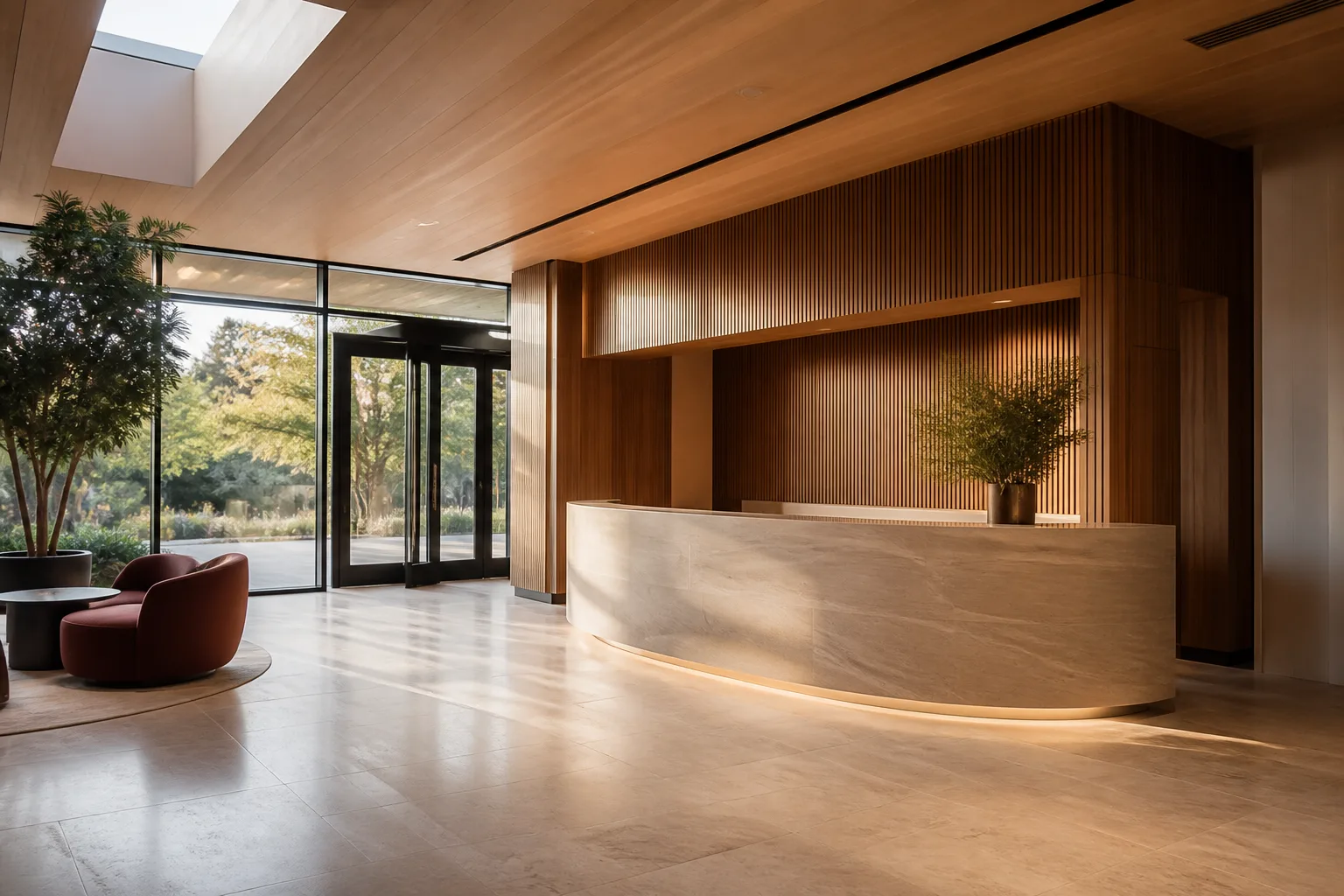
The reception area gives patients their first look at the practice. Upholstered chairs are vacuumed and hard seating is wiped, side tables and the coffee or water station are cleaned, and the entry glass is polished. In a pediatric or family office, the play corner’s small chairs, tables and wall toys are wiped down and the rug or floor under them is cleaned.
At the front desk, the counter, sign-in tablet, card reader, phones and keyboards are wiped. Treatment plans, X-ray images on screen and the day’s schedule are left exactly as staff leave them, since HIPAA-aware training teaches the crew to keep its eyes off patient information. Consultation rooms and the doctor’s private office are dusted, and their bins are emptied.
Restrooms, staff lounge and supplies
The patient restroom is cleaned and disinfected every visit, from the toilet and sink to the mirror, grab bar, partitions and floor. In the staff lounge, the counters, sink, refrigerator handles and microwave are wiped and the table is cleared. The office manager decides where refills come from: the practice’s own storeroom, or our janitorial supplies program, which brings in paper towels, tissue, soap and liners.
Floors under rolling stools and chairs
Dental floors take steady wear from stool casters, chair bases and nightly wet mopping. Sheet vinyl and luxury vinyl in the operatories are damp mopped every visit, with a periodic machine scrub to pull out the film that builds up at the edges. VCT in hallways and the lab can be stripped and refinished, and carpet in the reception area and private offices gets hot water extraction on a quiet weekend through our floor care and carpet cleaning services.
Entry mats at the front door catch much of the grit before it reaches the operatories, so they are vacuumed each visit and deep cleaned on the same calendar as the carpet.
Building the plan around the appointment book
An office that sees patients four days a week can take an evening visit after each clinic day, plus a lighter visit on the closed day if the lab or office side is busy, while a practice with Saturday hygiene hours can add a visit that night. No one starts on the route before their background check clears, and supervisors follow up with quality inspections. For the office’s vendor file we send a certificate of insurance, and our bonding and workers’ compensation are in place from day one.
The visit plan comes from your operatory count, the size of the reception and lab areas, your clinical hours and any steps your infection-control plan spells out. Send those details on our contact page and we will turn them into a written cleaning plan for the office.
A few useful answers
Common questions.
Which parts of the operatory does the cleaning crew handle?
The crew follows the list in your protocol, which usually covers the chair base and frame, stools, counters, the hand sink, cabinet fronts, switches, door hardware, waste and the floor.
Is the sterilization area part of the nightly routine?
Yes. Counters, sinks, cabinet doors and the floor in the sterilization room are cleaned in the order your infection-control lead sets.
How is patient information protected while the crew works?
Through HIPAA-aware training, our cleaners learn to work around patient details without reading them, so charts, treatment plans and open monitors stay as your team left them.
Can we book a terminal clean after oral surgery or a remodel?
Yes. A terminal clean of one operatory or the whole clinical wing can be scheduled for the night or weekend you choose, separate from the regular visits.
What should we tell you before cleaning starts?
Your operatory count, clinical hours, floor types and the cleaning steps your infection-control plan assigns to each room. Note any rooms that stay locked and where the alarm panel sits, and the first visit can follow your routine from night one.