
Industries
Veterinary Clinic Cleaning in Napa
Exam rooms, surgery suites, kennel wards and the front lobby of Napa animal hospitals, cleaned after hours and room by room to the clinic’s own protocol.
Printable checklist
Animal care buildings around Napa
Veterinary care around Napa comes in several shapes: small-animal hospitals that operate and keep patients overnight, neighborhood clinics set up in converted homes or storefronts, and emergency or specialty practices that keep longer hours. Each one pairs clinical rooms with a public lobby that sees dogs, cats, carriers and their owners from opening to close.
Napa Janitorial cleans a clinic once the last appointment is done, or before the doors open, so the morning team walks in to a lobby, exam rooms and treatment area ready for the first visit.
Exam rooms and the treatment area
Every exam room is worked in the same order. The table top, its pedestal and the floor scale are wiped, counters and sinks are cleaned, and the pulls on cabinets, drawers and doors get attention because hands reach for them between every visit. Bins are emptied and relined, and the floor is mopped with extra care along the baseboards, where fur gathers in drifts.
The clinic decides which product goes on which surface. Crews follow the practice’s written cleaning steps room by room, applying an EPA-registered disinfectant to each surface and leaving it through its label dwell time ahead of the wipe-down. Anyone placed in a veterinary building has completed bloodborne-pathogen safety training. For a periodic whole-building disinfecting visit on top of the routine, add disinfection and sanitizing.
Surgery suites and terminal cleaning
Surgery and dental procedure rooms carry the strictest standard in the building. The nightly visit covers floors, counters, door faces and the outside of the fixed equipment the clinic lists, in the sequence its protocol sets. When the practice books a terminal clean, the crew moves top to bottom through the suite: light housings, reachable walls, cabinet fronts, the table base and every fixed surface, then the floor last.
A terminal clean can follow a heavy surgery day, come before a suite reopens after a remodel, or run on a fixed day each week. Either way, the room is reset in time for the next morning’s first procedure.
Wards, kennels and isolation rooms
Kennels are cleaned as they empty, on the timetable the ward staff set. Kennel banks and runs are wiped inside and out, door latches get wiped down, and the crew scrubs and rinses the floor toward the drain where the room has one. Walls behind the runs are washed to the height the clinic names, and the room is left dry before animals return to it.
Isolation rooms come last on the route. They get their own mops, cloths and buckets, kept apart from the tools used in the rest of the building, and the crew follows whatever entry and exit steps the clinic posts on the door.
The lobby, scale and front counter
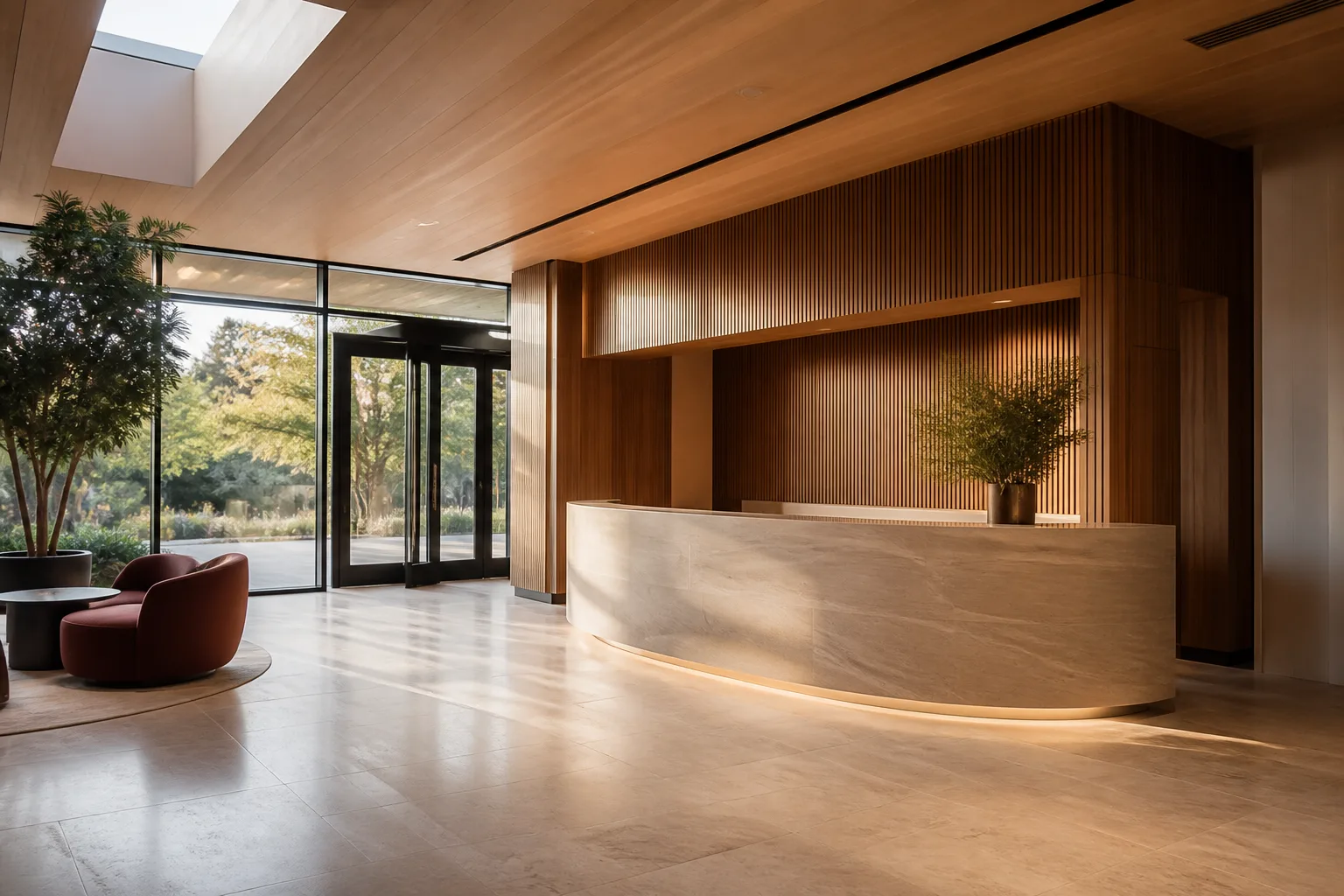
The lobby takes the most visible wear. Nose smudges are polished off the front door glass down to floor level, the waiting benches get a wipe, and the platform scale is cleaned along with the floor tile around it. Hair is vacuumed out of corners and from under seating, then the hard floor is mopped so the room greets owners with a fresh look and scent in the morning.
At check-out, the counter, card reader, phones and keyboards are wiped, and the display of prescription diets and treats gets a dusting. Charts, invoices and monitors are left exactly as the staff left them; HIPAA-aware training teaches our cleaners to leave records unread and in place.
Restrooms, staff rooms and hard-working floors
Restrooms for clients and staff get a full clean with disinfectant every visit, with tissue, towels, soap and liners refilled from our supplies or the clinic’s. The staff break room is wiped down, and doctors’ offices and the records area are dusted with their bins emptied. Supervisors walk the clinic on quality inspections, and every cleaner sent there has passed a background check. Workers’ compensation, bonding and insurance stand behind the crew on every visit.
Claws, gurney wheels and constant mopping wear clinic floors quickly. Sheet vinyl and sealed concrete are scrubbed on a periodic calendar, VCT is stripped and refinished, and lobby tile or stone is restored through floor care. For a deeper reset of the restrooms, restroom deep cleaning runs at weekly, monthly or quarterly intervals.
Matching visits to the clinic’s hours
A clinic that closes at six can be cleaned that same evening. A practice with late or weekend appointments can choose an early-morning visit instead, and a 24-hour emergency hospital can split the work into shorter visits around its quieter stretches. The price follows the number of exam rooms and kennel banks, the size of the lobby, how often surgery suites need a terminal clean and the floor work on the calendar.
Share the clinic’s opening hours and a list of its rooms on the quote request page to get a written cleaning plan back.
A few useful answers
Common questions.
Can the crew use the disinfectant our clinic already stocks?
Yes, when your protocol names it. Crews follow its label directions, including how long it stays wet. If you prefer, we bring an EPA-registered product instead.
Can the surgery suite get a terminal clean on a set day?
Yes. Your clinic can schedule one weekly, after a particular procedure day or on any date your clinical lead picks, and it runs from the light housings down to the floor.
How is pet hair kept off the lobby floor and seating?
Each visit vacuums corners, baseboards and the space under benches before the floor is mopped, and upholstered seating is vacuumed too. Entry mats are vacuumed so less hair and grit is tracked inside.
How are wards cleaned when animals stay overnight?
Ward cleaning follows the timetable your staff set. Kennels are cleaned as they empty, and the crew keeps noise down near runs that are still occupied.
Are the cleaners screened before they work in our clinic?
Yes. Background checks are complete for each cleaner before they set foot in the clinic, and supervisors inspect the finished work.