
Guide
When Napa floors need strip and wax or carpet extraction
Daily mopping and vacuuming keep floors clean, but they cannot restore a worn finish or lift soil buried in carpet pile. This guide covers the signs that a floor needs more and how to time the work around guests and staff.
Reading the signs on a hard floor
The first sign is usually a change in light. A VCT corridor in a hotel or a resilient floor in a winery office that once reflected the ceiling fixtures starts to look flat, even right after mopping. That dullness means the finish itself is wearing, and no amount of daily cleaning will bring it back.
Other signals are easy to spot on a slow walk through the building: traffic lanes worn down the middle of a corridor, darker patches where soil has worked into the finish, scuffs that will not lift, and grout lines a shade darker than the tile around them. In tasting rooms and restaurant entrances, the change often shows first just inside the door.
Natural stone and concrete give their own signs. Stone loses its even appearance where traffic is heaviest, and back-of-house concrete holds ground-in soil from carts and spills that a mop only spreads around.
Burnishing, recoating, stripping and waxing
These treatments work like a ladder, and the right rung is set by how far the finish has worn. Burnishing is the lightest step, restoring the gloss on a finish that is still intact. It suits lobbies and corridors with steady traffic that have not yet worn through.
Recoating goes one step further, adding a fresh top layer of finish once the surface has started to wear but before the wear reaches the floor beneath. Stripping and waxing is the full reset for resilient and VCT floors: the old finish comes off entirely and a new one goes down, taking the scuffs and embedded soil with it.
A sound rule is to choose the lightest treatment that will do the job. Regular burnishing and timely recoating stretch the interval between full strip and wax jobs, which keeps rooms open more of the year.
Tile, grout, stone and concrete
Tile floors in restrooms, kitchens and dining rooms rarely need a new finish; they need their grout cleaned. Tile and grout cleaning lifts soil out of the lines as well as off the tile face, and the floor regains an even color from wall to wall. In food service, kitchen tile is scheduled around service through restaurant and commercial kitchen cleaning.
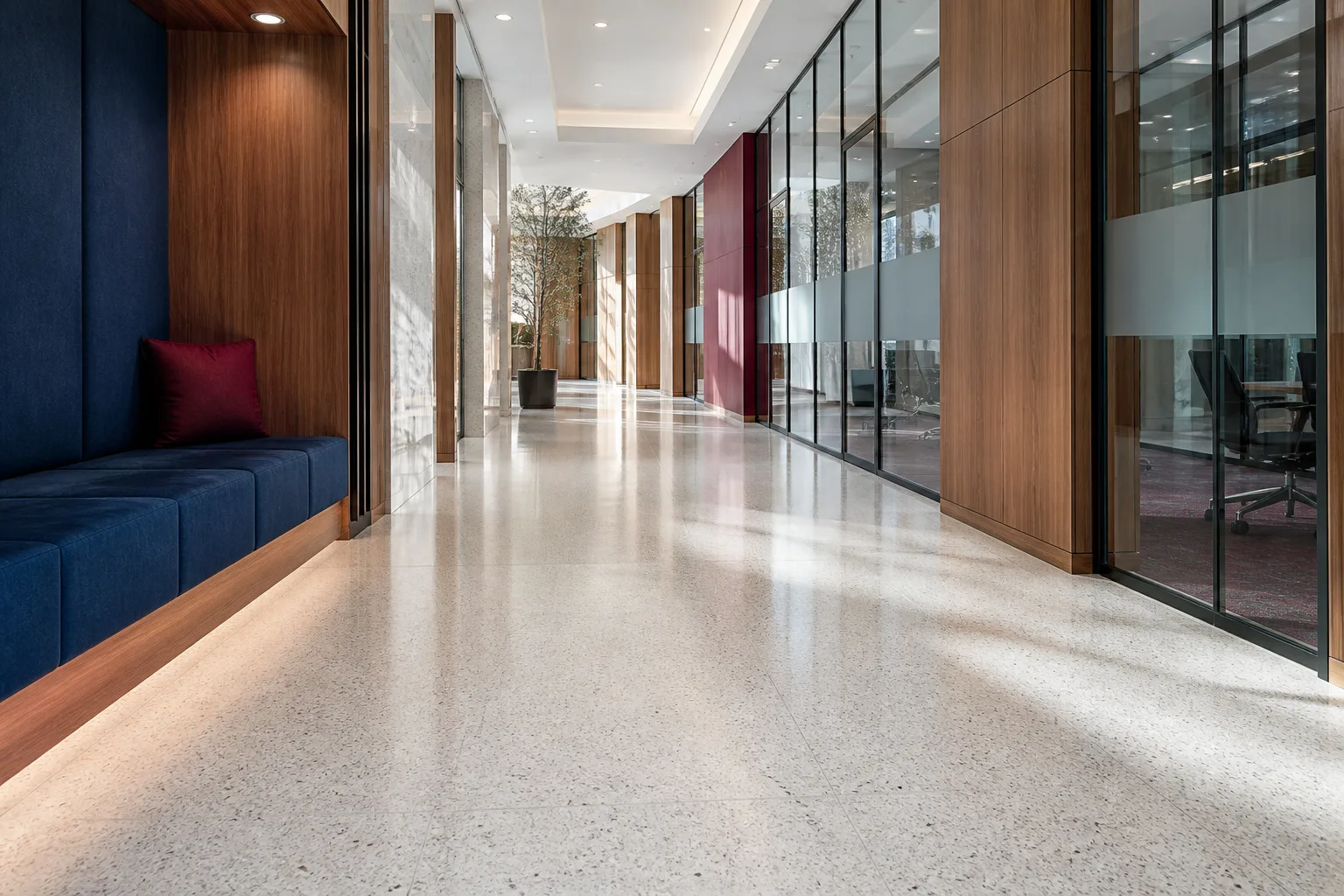
Marble and terrazzo in hotel lobbies and winery entries are cleaned and polished with methods suited to the stone, not the strip-and-wax used on resilient floors. Commercial concrete in production areas, storage rooms and back corridors is scrubbed to lift ground-in soil from the surface or its coating.
When carpet needs more than vacuuming
Carpet hides soil well, which is why it often goes too long before a deeper clean. Watch for traffic paths that look grey against the rest of the room, spots that come back after being blotted, and a general dullness in meeting rooms, hotel corridors and office floors. Vacuuming takes loose soil off the surface; what has settled below it needs extraction.
Hot water carpet extraction flushes soil from deep in the pile, and spot treatment deals with individual marks alongside it. Booking commercial carpet cleaning at a steady interval, rather than waiting for a visible problem, keeps carpet looking even from one season to the next. Offices can see where extraction sits in a recurring plan in our room-by-room office cleaning checklist.
Scheduling floor work around business hours
Floor treatments need empty rooms, so they belong in evenings, weekends or days the property is closed. Stripping and waxing in particular needs time for the new finish to cure before foot traffic returns, so plan it for a stretch when the room can stay shut.
Napa’s calendar helps here. The quieter months suit larger resets such as stripping and waxing or deep grout work, while burnishing or recoating just ahead of the busy season gives lobbies and tasting rooms a fresh finish when the most guests arrive. Hotels can coordinate floor work with their hotel cleaning so common areas are treated in sequence rather than all at once.
Walk each floor type with the crew lead and decide which areas go first under floor care. What each treatment costs per square foot is in our Napa cleaning cost guide.
A few useful answers
Quick answers.
How can we tell whether a floor needs burnishing or a full strip and wax?
If the finish is intact but dull, burnishing or recoating brings it back. If traffic lanes have worn through or soil is trapped in the finish, stripping and waxing is the right reset.
How often should office carpet receive hot water extraction?
Set the interval by traffic rather than the calendar, with entrances and corridors extracted more often than private offices. Booking it before soil shows keeps the carpet even.
Can hard floor work and carpet cleaning be booked for the same night?
Yes. Properties with both hard floors and carpet can schedule the work together on an evening or closed day, so the building is disturbed only once.
How long does a room stay closed for a strip and wax?
The room stays closed while the old finish comes off, the new one goes down and it cures, so the work is booked for a night, weekend or closed day when the space is not needed.
Resources
Related guides
Services