
Guide
Day porter or nightly janitorial: a Napa buyer’s guide
A Napa tasting room on a Saturday afternoon and the same room at closing call for two different kinds of care. This guide sets out which one your property needs and how the two fit together.
Two shifts, two different jobs
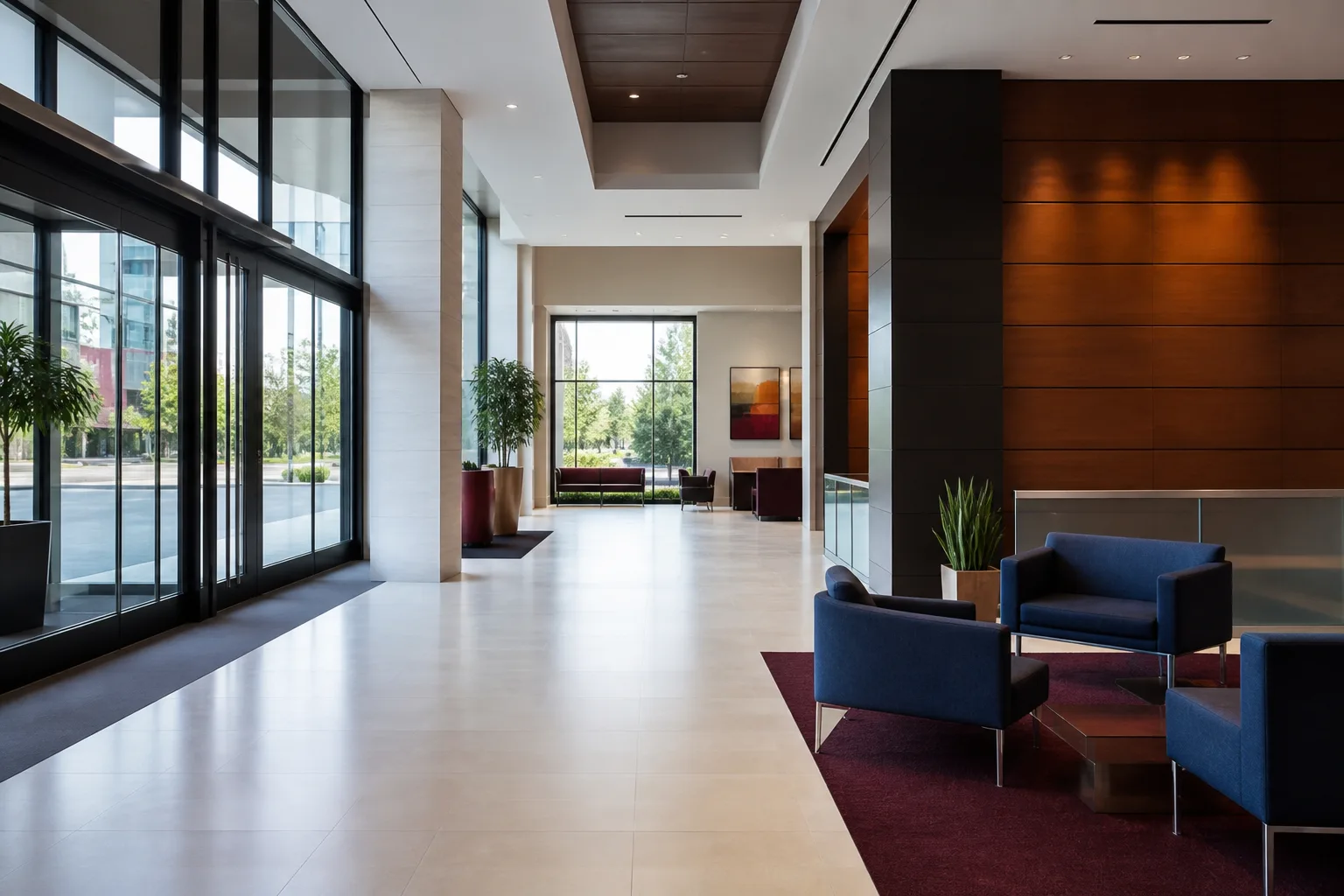
Think of a hotel lobby at four in the afternoon. Guests are checking in, the restroom off the lobby is in steady use, and the bin beside the coffee station is filling. Nobody wants a mop bucket in the middle of that scene, yet the room still needs looking after. That is the work a day porter is there for: light, attentive upkeep carried out while the public is present.
Now picture the same lobby after midnight. The guests are upstairs, the front desk is quiet, and the floors, restrooms and surfaces can be cleaned properly without anyone stepping around the work. That is nightly janitorial service, the fuller clean that resets the property for the next morning.
Both keep the building presentable. They approach the job from opposite ends of the day, and most buying decisions come down to which end of the day your property finds harder to keep up with.
Signs your property needs daytime coverage
The clearest signal is a building that looks fine at opening and tired by mid-afternoon. Restrooms run short of paper towels before the lunch rush is over, receptacles near the entrance overflow, and litter collects along the front walk faster than staff can step away to deal with it.
Tasting rooms with weekend crowds, hotel lobbies at check-in, food courts and busy restaurants all fit this pattern. So does a multi-tenant office building where visitors pass through a shared lobby all day. In each case the trouble is not the overnight clean; it is the long stretch of open hours between one clean and the next.
A porter closes that gap by restocking, emptying receptacles, wiping visible spots and collecting litter outside while the doors are open. Your own team stays with guests instead of chasing supplies.
When nightly janitorial is enough
Some buildings simply do not wear down during the day. A professional office with a few client appointments, a back-office suite or a quieter retail space can carry a full day of use and still look composed at closing. For these properties, a well-planned schedule of recurring janitorial cleaning does the whole job.
Scheduled after-hours visits cover what a porter is not there to do: restroom fixtures cleaned thoroughly, floors vacuumed and mopped, breakroom counters and tables wiped down, accessible desks and interior glass attended to. Because nobody is in the room, the crew works through it in order rather than around people.
If you find yourself wishing the evening clean lasted a few hours longer each day, that is the moment to look at porter coverage. Setting the visit count itself is covered in our guide to how often a commercial space should be cleaned.
Putting the two together
The strongest plans for busy Napa properties use both. A day porter keeps public spaces in order while guests are present, and the janitorial crew arrives after closing for the deeper clean. Each shift makes the other easier: the porter keeps small messes from building up, and the night clean means the porter starts each morning in a reset building.
Hotels are the most familiar example. Lobby, fitness room and meeting room traffic peaks across the day, so porter coverage looks after those spaces, while hotel and hospitality cleaning handles common areas and guestroom turnover on its own schedule.
Wineries follow the same logic on a weekly rhythm. Weekend porter hours in the tasting room absorb the crowds, and winery and brewery cleaning looks after tasting rooms, cellars and production floors under your own procedures.
Placing porter hours where they count
Porter coverage is scheduled and priced by the hour, as our Napa cleaning cost guide shows, so it pays to place those hours carefully. Start by naming your busiest days and the stretch of each day when restrooms and entrances take the most traffic. For many tasting rooms that is Saturday and Sunday afternoon; for an office building it is often the hours either side of lunch.
Night porters suit a different profile: restaurants and venues that stay busy into the evening, or properties that want lobbies and common areas reset before the morning crowd. Seasonal coverage works too, with hours added for the busy months and trimmed once traffic settles.
Make a note of the restrooms, entrances and waste points that fill first on your busiest day. From there, day and night porter coverage is shaped around what the property actually experiences.
A few useful answers
Quick answers.
Which shift should a new Napa tasting room start with?
Start with recurring janitorial visits after closing, then add weekend porter hours once crowds make restrooms and entrances hard to keep up with through the afternoon.
Can porter coverage run only on Saturdays and Sundays?
Yes. Porter hours can be concentrated on the weekend, when tasting rooms, hotel lobbies and restaurants see their heaviest traffic.
Will a porter get in the way of our guests?
Porter work is light and unobtrusive, carried out around guests rather than in their path, which is why it suits lobbies and tasting rooms during open hours.
Does a night porter replace an after-hours janitorial visit?
A night porter resets lobbies and common areas between busy periods, while janitorial visits deliver the fuller clean of restrooms, floors and work areas, so an evening venue often benefits from both.
Services